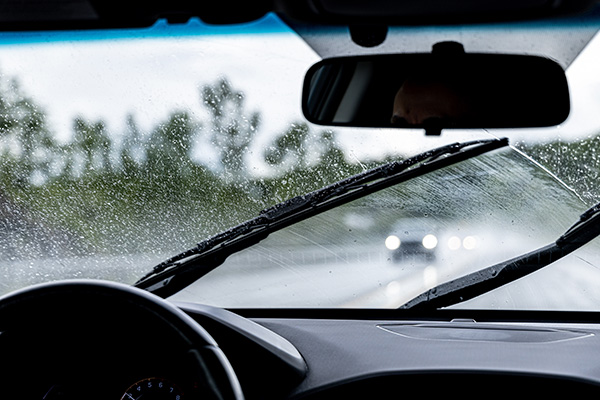
Wiper blades can look fine while the weather is dry, then fall apart the first time you need them in steady rain. Heat, sunlight, dust, and months of sitting against hot glass all wear down the rubber long before the blade actually breaks.
Before the rainy season starts, it is worth testing them instead of waiting for a bad commute to find out they are finished. At our shop, we check how cleanly the blades wipe, whether the rubber is still flexible, and whether the arms maintain even pressure against the windshield.
1. They Leave Streaks Across the Windshield
A good wiper should clear water in one clean pass. When the rubber edge wears, hardens, or gets contaminated, it starts leaving thin lines of water behind.
A dirty blade can sometimes be cleaned and put back into service, so we do not replace it just because of one streak. If the same lines keep coming back after cleaning the blade and glass, the wiping edge is probably worn enough that replacement is the better choice.
2. The Blades Skip or Chatter Across the Glass
Chattering happens when the blade does not glide evenly across the windshield. Instead of staying flat against the glass, it grabs, releases, and jumps as the arm moves.
That usually points to hardened rubber, a damaged blade frame, contamination on the windshield, or weak pressure from the wiper arm. If the blade is old and noisy every time it rains, there is not much reason to keep fighting with it. A fresh blade should move quietly and stay in contact through the full sweep.
3. You Can See Cracks, Splits, or Missing Rubber
Physical damage is one of the easiest signs to spot. Lift the wiper arm and look closely at the rubber edge.
Signs that the blade is near the end of its life include:
- Cracks along the wiping edge
- Sections of rubber splitting away
- Missing pieces
- A blade edge that feels hard instead of flexible
- Rubber pulling away from the frame
- Visible deformation or twisting
Once the rubber starts coming apart, it will not improve. Leaving it on the car only increases the chance that it will smear water badly or expose the harder blade structure to the windshield.
4. They Leave a Hazy Film Instead of Clearing Water
Not every bad wiper leaves obvious streaks. Some spread a thin layer of water across the glass, making the windshield look cloudy.
That haze becomes much more noticeable at night when headlights reflect through it. You can also see it during early-morning or evening commutes when low-angle sunlight hits the windshield. If you find yourself looking through a smeared film every time the blades move, the rubber is no longer clearing the glass the way it should.
5. Part of the Windshield Stays Wet After Every Pass
A blade should follow the curve of the windshield from one end to the other. When part of the rubber loses flexibility or the frame bends, sections can stop making proper contact.
You might see a large wet area in the middle of the blade path or along one end. At our shop, we also check wiper arm tension because a weak or bent arm can create the same symptom. If the arm is applying good pressure and the blade still misses part of the glass, replacing the blade is usually the right move.
6. The Blades Have Already Been Through a Hot, Dry Season
Wiper life is not only about how often you use them. A car sitting outside in warm weather can wear blades even when the windshield stays dry for weeks.
Sunlight and heat harden the rubber, while dust and grit settle along the wiping edge. That is especially important after a long dry period, because the first heavy rain asks those same blades to suddenly clear a lot of water. Regular maintenance should include checking the rubber before the rainy season rather than waiting for a failure during the first storm.
Test the Washer System at the Same Time
Fresh wiper blades still need a working washer system. Make sure the reservoir is full, the pump works, and the nozzles spray the windshield evenly.
During an inspection, we also look for clogged nozzles, split hoses, and weak spray patterns. Washer fluid helps remove dust, road film, bug residue, and grime that plain rainwater leaves behind. If the glass stays dirty even with good blades, the washer system deserves attention too.
Get Wiper Blade Service In San Diego, CA, With Import Auto Specialists
If your wipers are streaking, chattering, missing sections of the windshield, or showing cracked rubber, Import Auto Specialists in San Diego, CA, can check the blades, wiper arms, and washer system before the rainy season gets underway.
Schedule a wiper inspection to keep the windshield clear when the weather turns wet.